


Sevilla · Graphic Design and Art Direction
The Pioneer Who Shaped the Visual Identity of Modern Andalucia
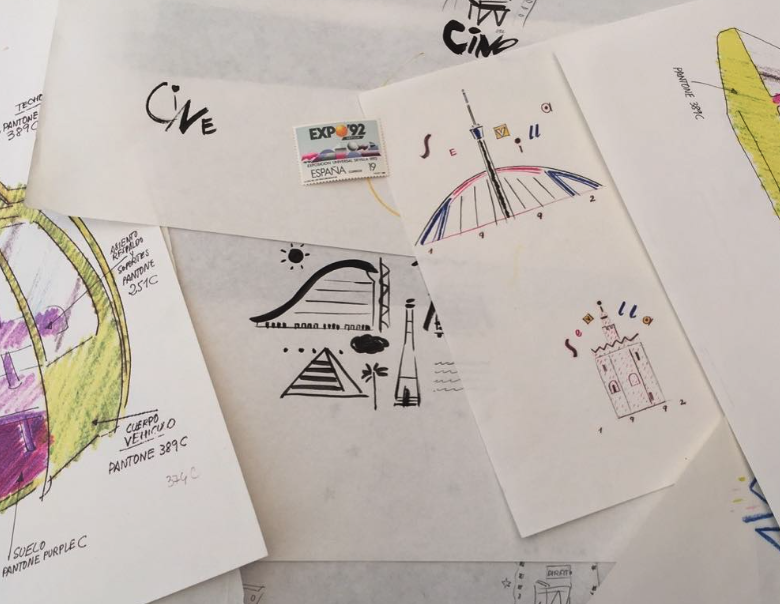
Few figures have left such a profound and lasting mark on Andalusia’s visual heritage as Enrique Acosta Naranjo (Seville, 1944). He is the creator of some of the region’s most recognisable symbols, from the visual identities of Canal Sur Television and Radio and the Andalusian Health Service (SAS) to the logo of the Seville Flamenco Biennial. His role was equally decisive in shaping the international image of Expo ’92, for which he created the first commemorative postage stamp, won the competition to design the visual identity of its transport system, and developed key identities such as those of the Holy See Pavilion and Extremadura Enclave 92. Throughout his decades-long career, his work has demonstrated that graphic design can transcend its purely functional purpose to become part of a shared cultural heritage.
After beginning his career in 1965 and working in creative and art direction for major advertising agencies in Madrid and Seville, he founded his own studio, Acosta Diseño (now eaBranding), in 1986. Far from limiting himself to a single discipline, his profile as a multidisciplinary artist naturally brings together painting, advertising, and corporate identity, with projects ranging from major brands such as Cruzcampo and Iberia to cultural institutions, theatres, and public spaces.
This commitment to combining aesthetic rigour with social purpose also defined his academic career as a cum laude PhD graduate and Associate Professor of Graphic Design at the Faculty of Fine Arts in Seville. There, he pioneered projects such as the colour design of the Virgen del Rocío Children’s Hospital, for which he received the Extraordinary Doctoral Thesis Award, and the initiative Así lo vemos (“This Is How We See It”), bringing professional design practice closer to real social challenges. A truly remarkable career that confirms how, when artistic sensitivity is placed at the service of communication, design has the power to humanise our surroundings.